Certificate Management

Digital certificates verify system identity and enable encrypted communication. They need lifecycle management, ownership, monitoring, and governance.

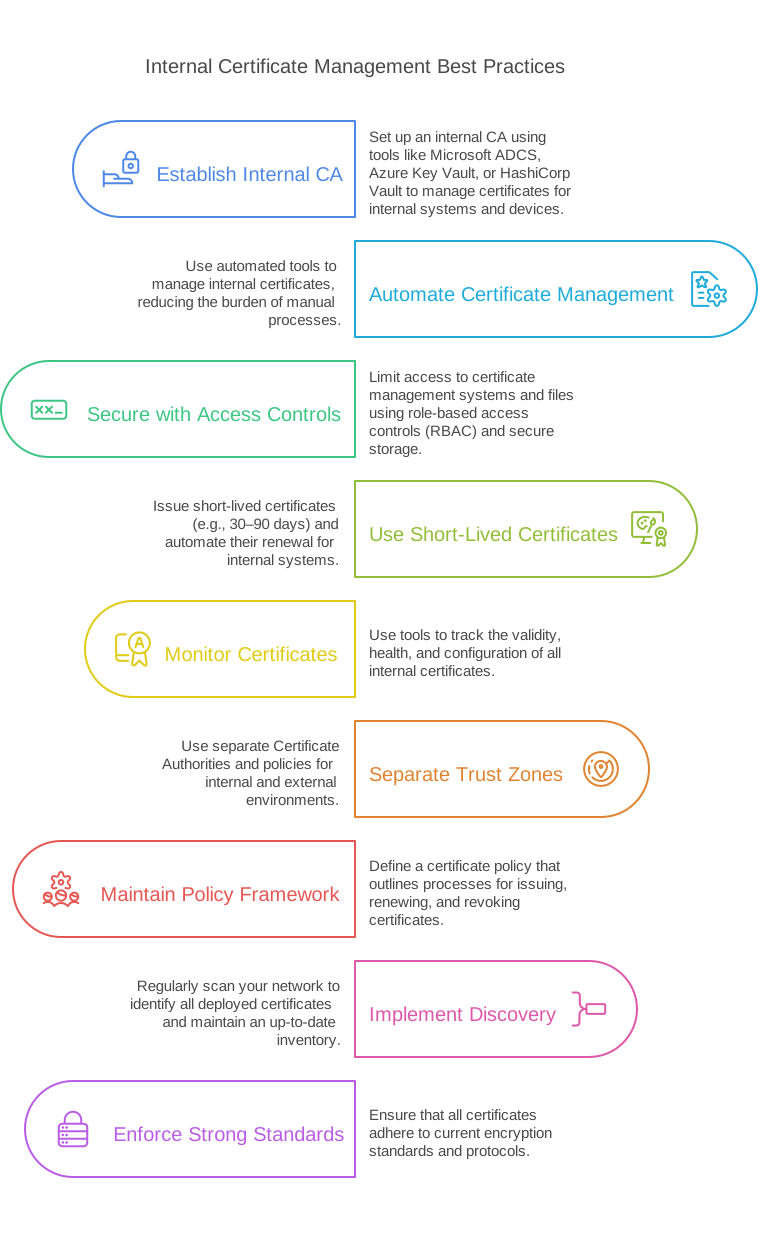
Internal Certificate Management best practices

The original guidance is strongest when treated as an operating model: CA design, automation, monitoring, access control, policy, and discovery all need to work together.

Why Certificates Matter

Digital certificates are like digital passports. They prove the identity of websites, servers, systems, users, devices, and applications. If they expire, are misused, or are compromised, they can cause outages and security incidents.

Internal Certificate Management

Internal certificate management protects communication inside the organisation. It requires a private Certificate Authority or equivalent service, clear issuance and renewal policies, secure key handling, monitoring, and automated lifecycle management.

External Certificate Management

External certificates protect public-facing services and customer trust. They need the same operational discipline: ownership, monitoring, renewal process, strong cryptographic standards, and clear incident procedures.

Architecture Point

Certificate management is not just a technical housekeeping task. It is an operational security capability involving people, process, tooling, monitoring, and governance.

Common Certificate Management Risks

Risk / IssueDescriptionBusiness ImpactMitigation
Lack of Comprehensive Certificate InventoryExpired or unknown certificates are missed because there is no complete view.Outages, unauthorised access, audit findings, and unmanaged exposure.Run discovery, maintain a central repository, and continuously monitor.
Manual Management ErrorsManual issuance, configuration, and renewal processes are error-prone.Service disruption, loss of trust, and preventable downtime.Automate issuance, renewal, revocation, and reporting where possible.
Inadequate Revocation HandlingCompromised or outdated certificates are not revoked quickly enough.Potential interception, misuse, and prolonged incident exposure.Implement OCSP or CRLs, test revocation processes, and monitor incidents.
Weak Access ControlsToo many people or systems can issue, export, or manage certificates.Unauthorised certificate issuance and weakened system trust.Use RBAC, MFA, privileged access controls, and regular access reviews.
Lack of Visibility into Certificate UsageTeams do not know where certificates are deployed or which services rely on them.Slow incident response and poor impact assessment.Map certificates to owners, servers, applications, and business services.
Inconsistent Certificate PoliciesDifferent environments use different lifetimes, algorithms, and validation approaches.Compatibility problems and avoidable security weakness.Define a unified policy and standardise certificate profiles.
Delayed Response to VulnerabilitiesWeak algorithms or protocol issues are not remediated quickly.A longer window for exploitation and non-compliance.Track cryptographic guidance and maintain replacement procedures.
Over-Reliance on One CAA single CA becomes a concentration of operational and trust risk.CA compromise or outage can affect many services at once.Assess CA resilience, diversify where appropriate, and plan contingencies.
Insufficient Training and AwarenessPeople managing certificates lack clear guidance and operating practices.Misconfiguration, policy drift, and avoidable incidents.Provide training, procedures, templates, and ownership guidance.

Certificate Management Policy Framework

The framework introduces a governance structure for certificate lifecycle risk: discovery, renewal, revocation, cryptographic standards, access control, monitoring, auditability, and ownership.

It aligns certificate management to operational continuity, NCSC cloud security principles, NIST key-management guidance, ISO 27001 cryptography controls, and PCI-DSS key/certificate lifecycle expectations.

Open policy template Open security standard

Downloadable Templates